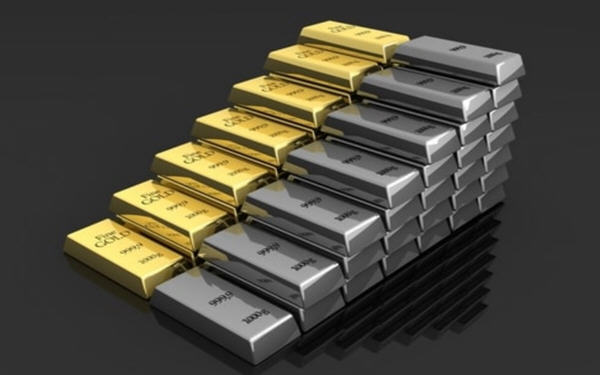
Gold prices recently surged amid Middle East tensions before retreating slightly, while silver followed the rally, peaking above $37 but still well below its historic highs in 1980 and 2011. According to an analysis by Erik Norland, Managing Director and Chief Economist at CME Group, the fluctuating gold-silver ratio—the number of ounces of silver needed to buy one ounce of gold—reflects a complex interplay of central bank policies, shifting industrial demand, and China’s economic growth.
In June, the ratio briefly surpassed 100 (1:100) for the first time since 2020 before easing back toward 90, remaining far above the 1997–2011 range of 25 to 83. Norland noted that while gold and silver prices typically move in tandem (with a one-year rolling correlation of 0.68 to 0.95), their price linkage is now at its weakest in over two decades.
Both metals saw peak mining output in the mid-2010s before stabilizing, but gold’s supply dynamics have been transformed by central bank activity. Since 2008, central banks have shifted from net sellers to net buyers, effectively permanently removing gold from the market. “Excluding official sector transactions, gold supply today is actually lower than in 2005,” Norland said, “while silver supply has risen by over 35%.”
In contrast, silver lacks such structural support. Its price remains heavily tied to industrial cycles: photography once accounted for 25% of annual silver demand but now makes up less than 4%. Though solar panels and batteries offer new demand drivers, silver’s industrial reliance leaves it vulnerable to economic downturns.
Norland highlighted that the gold-silver ratio closely tracks China’s industrial demand. Weakness in Chinese manufacturing weighs on silver, whereas gold benefits from its dual role as a safe haven and central bank reserve asset. While solar sector growth could bolster silver long-term, it may not offset near-term industrial softness.
Norland concluded that central bank gold accumulation and the decline of photographic demand are key forces widening the ratio. Though green energy adoption may eventually support silver, gold’s monetary premium and silver’s industrial tether could keep the ratio elevated amid ongoing geopolitical and economic uncertainty.