Lockheed Martin Reactivates Pacific Seabed Mining Plans After 40 Years
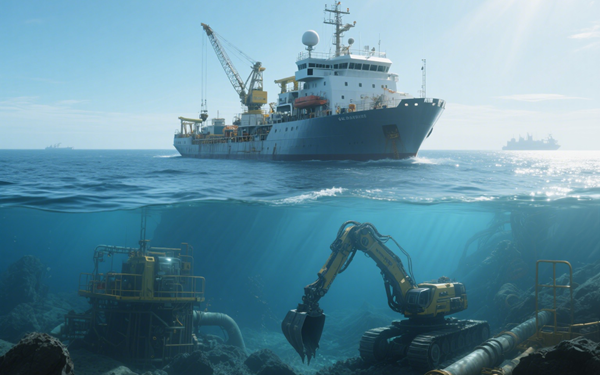
US defense giant Lockheed Martin (NYSE: LMT) is returning to deep-sea mining, holding preliminary talks with multiple mining companies to jointly develop its long-held Pacific seabed exploration licenses. This move follows an April executive order by US President Donald Trump asserting America’s right to issue mining licenses in international waters and proposing the classification of seabed minerals as strategic assets.
Lockheed Martin holds two exploration licenses in the Clarion-Clipperton Zone (CCZ) of the eastern Pacific. Originally granted by US regulators during the early 1980s wave of ocean mining interest, these licenses remained unused for decades. In April, Norwegian company Loke Marine Minerals filed for bankruptcy, resulting in the licenses returning to Lockheed Martin’s control through an asset auction.
Frank St John, Lockheed Martin’s Chief Operating Officer, stated that seabed mining groups have shown “significant interest” in the licenses. The company confirmed that interested parties have conducted due diligence and identified value at the sites, though it declined to disclose potential deposit valuations. The resurgence in seabed mining is driven by soaring demand for critical raw materials essential for electric vehicle batteries and modern defense technologies. Concurrently, China’s dominant position in this market is pushing Western nations to strengthen domestic supply chains.
Polymetallic nodules – rock formations rich in nickel, cobalt, copper, manganese, and other minerals vital for EVs and electronics – are believed to be abundant in the Pacific. US government estimates indicate over 1 billion metric tons of such nodules exist within American-licensed zones, with potential to add $300 billion to GDP and create 100,000 jobs over a decade. This has spurred surging interest from mining companies.
However, seabed mining ambitions face significant hurdles. The International Seabed Authority (ISA) continues developing environmental and regulatory frameworks for deep-sea extraction. Representatives from 169 countries and the EU are negotiating standards covering royalties, taxation, and environmental impacts. Meanwhile, as the US has never ratified the United Nations Convention on the Law of the Sea, it maintains its own licensing regime through the National Oceanic and Atmospheric Administration (NOAA).
Cobalt
Copper
Electric Cars
Manganese
Nickel