
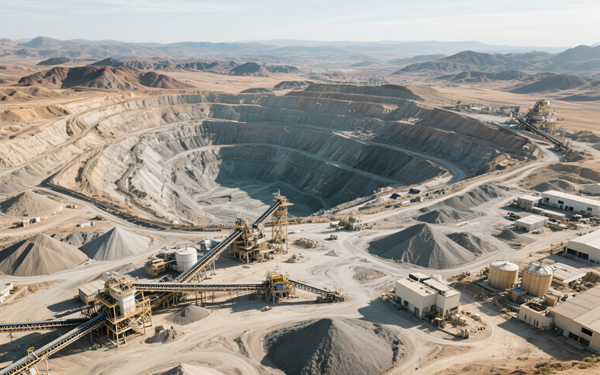
Rare earth prices have surged to their highest level in more than two years after U.S. mining company MP Materials (NYSE: MP) halted shipments to China amid rising demand. Over the past three years, the company supplied 7% to 9% of China’s neodymium-praseodymium (NdPr) oxide—a key material for permanent magnets used in electric vehicles, wind turbines, and defense equipment.
The price of NdPr oxide in China soared from $63/kg on July 9 to $88/kg, marking a 40% increase and reaching its highest point since March 2023. Meanwhile, MP Materials’ stock rose 3.6% in New York trading on Tuesday, bringing its market capitalization to $13.24 billion.
This price surge comes as Western nations seek to reduce their reliance on China. In July, MP Materials signed an agreement with the U.S. government to cease exports to China and shift refining operations domestically. The U.S. also committed to a floor price of $110/kg—roughly double the market rate in China at the time—to secure local supply chains.
MP’s shipments were a very material portion of NdPr oxide supply for China’s factories, so that’s left a big void, said Ryan Castilloux, Managing Director of Adamas Intelligence. At the same time, demand for NdPr oxide is rebounding. Benchmark Mineral Intelligence noted that China is currently in its peak manufacturing season for EVs, wind turbines, and electronics. Analysts expect demand to grow by about 10% this year, outpacing China’s domestic output increase of just 5%.
Earlier this month, Beijing introduced new regulations for rare earth products, simultaneously tightening smelting and separation quotas and implementing special quotas for strategic elements such as praseodymium, neodymium, dysprosium, and terbium. The London Metal Exchange’s rare earth price index jumped 12% in a single day. Analysts say the move further strengthens China’s grip on the global supply chain. Currently, China accounts for 90% of global rare earth refining capacity and about 70% of mined production.
In response, U.S. President Donald Trump revived tariff threats this week, warning of “200% tariffs or something similar” unless China ensures magnet shipments to the U.S. As the world’s largest producer of permanent magnets, China restricted exports in April after the U.S. raised tariffs. The impact was immediate: shipments to the U.S. fell 58% in April and 81% in May compared to the previous month.
This crisis has exposed critical vulnerabilities in the global rare earth supply chain. Although companies like Australia’s Lynas and the U.S.’s MP Materials are accelerating production expansion, overseas rare earth capacity is projected to meet only 28% of global demand by 2025. An even thornier challenge is the widespread technical bottlenecks in extraction processes outside China.