
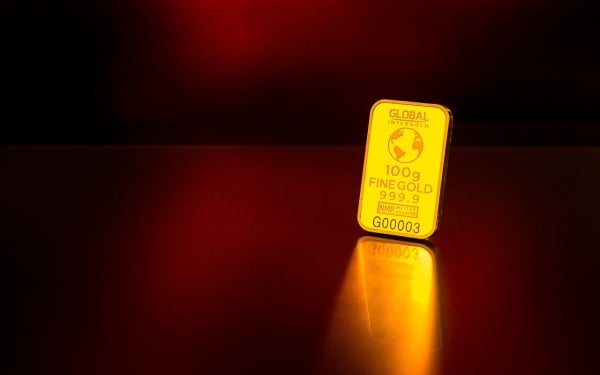
President Donald Trump declared via social media on Monday that gold imports will not be subject to U.S. tariffs, calming markets after a sudden ruling by U.S. Customs and Border Protection (CBP) caused global turmoil. The CBP had earlier determined that imports of gold bars—specifically 1-kilogram and 100-ounce bars—would be taxed.
Unlike commodities such as copper, gold holds dual roles as a financial asset and global currency. Had the CBP decision taken effect, it would have disrupted worldwide bullion markets and potentially impaired the smooth functioning of U.S. futures contracts. Kilogram bars are key trading units on New York’s COMEX.
Following Trump’s announcement, gold futures on COMEX and London’s global spot benchmark showed minimal movement. Spot gold pared some losses but remained down over 1.2% for the day.
The industry had widely expected gold bars to be exempt from Trump’s “reciprocal tariffs,” including a 39% duty on Swiss exports. Switzerland is a major gold exporter. Friday’s tariff reports thus sent U.S. gold futures soaring to record highs. Gold prices have climbed to unprecedented levels this year amid robust central bank buying and haven demand fueled by Trump’s trade wars.
Switzerland—the world’s refinery—appeared most impacted. As the top gold refiner, it exported an estimated $61.5 billion worth of gold to the U.S. in the year through June, yet its industry is tiny—just five major refineries employing around 1,500 people—so the Swiss National Bank argued gold should be exempt from U.S. tariff calculations.