
American Tungsten Corp. (TSXV: TUNG, OTCQB: DEMRF)
Building America’s Defense Critical Metals Supply
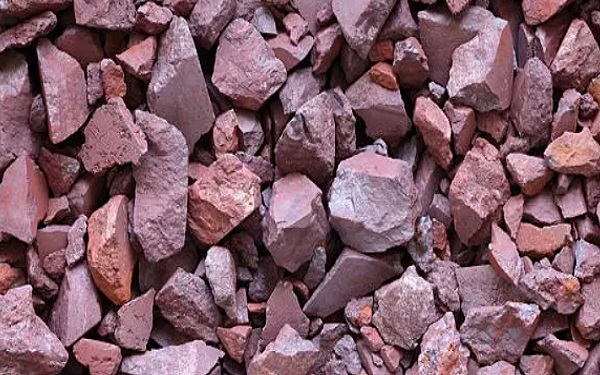
As of Tuesday, August 26, 2025, global iron ore futures prices declined as fresh tariff threats from U.S. President Donald Trump sparked concerns over steel demand prospects, coupled with persistent weak demand from China, leading iron ore to retreat again after Monday’s brief rebound.
The most-traded January iron ore contract on China’s Dalian Commodity Exchange (DCE) closed at 776.5 yuan (approximately $108.56) per metric ton, down 0.7% for the day, failing to extend the previous session’s gains which had pushed prices to their highest level since August 14. Earlier on Monday, news that Rio Tinto’s Simandou project in Guinea had suspended operations due to a fatal accident had triggered immediate supply concerns and driven up iron ore prices.
The primary catalyst for the price decline was Trump’s latest trade policy remarks. Late Monday, amid ongoing trade tensions between the U.S. and China, Trump stated, “China has to give the United States magnets or we have to charge them 200 percent tariff or something.”
Trump also threatened countries with digital taxes by imposing “subsequent additional tariffs” on their goods if such policies remain. Although recent U.S. trade deals with several countries and regions had alleviated fears of a global recession, the new tariff threats reignited concerns about demand for commodities.
On the fundamental side, China, the world’s largest iron ore consumer, continues to face deflationary pressures and weak consumer confidence, leading to shrinking steel demand. Over the past year, purchasing enthusiasm from Chinese steel mills has remained subdued, with iron ore prices accumulating a decline of over 30%. The low-price environment has squeezed profits for major mining companies: Australia’s Fortescue reported its smallest annual profit in six years, while BHP’s earnings fell to a five-year low.
In the derivatives market, steelmaking raw materials faced broad declines. Coking coal and coke contracts on the DCE fell by 3.17% and 2.41%, respectively. On the Shanghai Futures Exchange, rebar declined by 0.99%, hot-rolled coil dropped 0.71%, wire rod lost 0.89%, while stainless steel inched up marginally by 0.08%.
Analysts pointed out that the iron ore market is currently under dual pressure from both policy and fundamental factors: on one hand, the Trump administration’s trade protectionist policies are increasing uncertainty in global supply chains; on the other hand, the ongoing slump in China’s real estate sector continues to constrain steel demand recovery. In the short term, if China’s macroeconomic policies do not show significant effectiveness in the coming months, iron ore prices may continue to fluctuate within a downward trend.