Buffett Ends 17-Year Investment Journey with Full BYD Exit
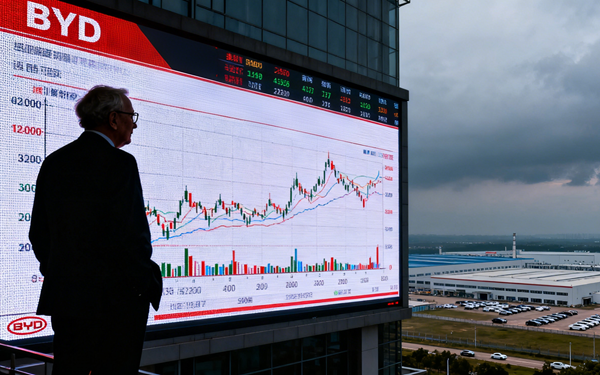
A legendary investment chapter that began in the depths of the 2008 financial crisis has quietly closed as Warren Buffett completely steps away from the Chinese electric vehicle maker. Berkshire Hathaway, under Warren Buffett’s leadership, has sold off its entire stake in BYD, marking the end of a 17-year investment in the Chinese electric vehicle (EV) giant.
The disclosure, revealed in Berkshire’s latest filings, shows the holding was reduced to zero by the end of the second quarter. This move triggered a 3.4% drop in BYD’s Hong Kong-listed shares on Monday, contributing to a total decline of approximately $300 billion in the company’s market valuation since its peak in May.
The End of an Era
The investment began in September 2008 when Berkshire Hathaway, on the strong recommendation of Buffett’s late partner Charlie Munger, acquired 225 million BYD H-shares at HK$8 per share. Munger once praised BYD founder Wang Chuanfu as a combination of Thomas Edison and Bill Gates, believing he could lead the new energy revolution.
Over the following 14 years, despite market fluctuations that saw BYD’s shares fall to HK$9 in 2012 and surge to HK$237 in 2021, Buffett held the position steadfastly. This patience was rewarded handsomely: the initial HK$1.8 billion investment grew by approximately 3,890%, generating returns exceeding HK$60 billion.
The turning point came in August 2022 when Berkshire began gradually reducing its stake. Between August 2022 and July 2024, Hong Kong stock exchange records showed 16 separate disposals. By June 2024, Berkshire’s shareholding had fallen below the 5% reporting threshold.
In response to the complete exit, BYD’s General Manager of Brand and Public Relations, Li Yunfei, stated on social media, “In stock investing, buying and selling are normal practices.”. He expressed gratitude for “the recognition from Munger and Buffett, and for the 17 years of investment, support, and companionship”. His post concluded with, “Cheers to all long-termism!”.
While acknowledging the normalcy of such transactions, the company simultaneously demonstrated confidence in its own future. On September 10, BYD announced that a group of its executives had collectively increased their holdings by 488,200 shares, amounting to approximately 52.3 million yuan.
Western Investors Follow Suit
Buffett’s exit appears to have influenced other major Western investors. BYD’s top five institutional shareholders — Vanguard, BlackRock, JP Morgan, Fidelity, and Citigroup — collectively sold 222 million Hong Kong-listed shares in the second quarter, worth approximately $3.3 billion.
This selling pressure occurs against a backdrop of intense competition in the EV sector. In the second quarter of 2025, BYD reported a 30% year-on-year decline in net profit, which fell to 6.4 billion yuan. This drop is largely attributed to a fierce price war in the Chinese EV market. In May, BYD aggressively cut the starting price of its Seagull hatchback by 20% to 55,800 yuan (approximately $5,800), making it about a quarter of the price of Tesla’s most affordable Model 3 in China.
Strong Fundamentals Amid Challenges
Despite these challenges, BYD’s underlying business performance remains robust. The company’s revenue for the first half of 2025 reached 371.3 billion yuan, a 23% increase year-on-year, even surpassing Tesla’s revenue during the same period.
Its global expansion is progressing steadily. Overseas markets have become a significant growth driver, generating 135.4 billion yuan in revenue in the first half of the year, a surge of 130% compared to the previous year. In the UK, for instance, the company sold 1,759 vehicles in August, a 301% increase from the same month last year.
A New Chapter
The complete divestment by Buffett signifies the conclusion of a legendary value-investing case in the global capital markets. The 17-year partnership not only created immense wealth but also left a profound lesson in patience, vision, and investment discipline. As the global EV industry transitions from its explosive growth phase to a consolidation stage, BYD’s ability to maintain its advantage through technological innovation and international expansion will be the key test it faces in the post-Buffett era.
China News
Chinese Stocks
Electric Cars
Warren Buffett