China Becomes the New Epicenter of Global Metals Market Volatility
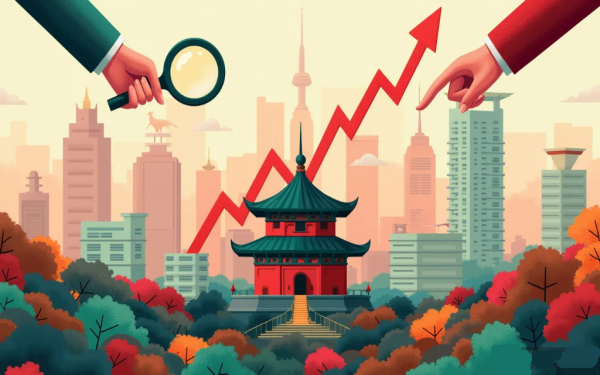
Global metals markets have experienced a period of intense turbulence, with prices for copper, lithium, palladium, gold, and silver plummeting in late January and early February. The primary force behind this significant volatility is increasingly traced back to trading activity within Chinese exchanges.
Data reveals that from late 2025 through January 2026, open interest for base metals contracts on the Shanghai Futures Exchange (SHFE) and lithium contracts on the Guangzhou Futures Exchange surged to record levels. During the same period, trading volumes for several metal futures on the SHFE also hit all-time highs.
The main driver of this unprecedented trading wave is China’s retail investors, who are deploying substantial capital into bets on continued rallies for base metals and lithium. This shift in dynamics has led ING commodities strategist Ewa Manthey to state unequivocally: “China has become the center of short-term price formation in metals.”
This marks a fundamental evolution in China’s role: it is rapidly transforming from the world’s long-standing largest physical consumer into a crucial “financial trading and short-term pricing hub.” The sheer scale of domestic speculative capital means that local market sentiment and fund flows can now rapidly amplify and impact global prices, triggering sharp corrections immediately after record highs are reached.
“Fundamentals still matter, but this shift means that positioning and momentum have started to play a bigger role, leading to more violent swings,” Manthey added. Analysts note that while long-term prices remain anchored by supply and demand fundamentals, the growing influence of speculative positioning points to more severe, frequent volatility and a heightened risk of abrupt market reversals due to sentiment or policy shifts.
In response to the market frenzy, Chinese regulators have intervened repeatedly to cool speculation. For metals like platinum, lithium, nickel, and tin, the SHFE and Guangzhou Futures Exchange have frequently raised margin requirements and widened daily trading limits. According to statistics, the two exchanges have issued over 38 circulars this year aimed at curbing excessive speculation in these commodities. ING’s Manthey observes that while stricter regulations have tempered the frenzy to some extent, they have not reversed the overall trend of rising speculative participation in Shanghai’s metals contracts.
The “metals mania” fueled by Chinese retail capital and its subsequent global ripple effects underscore a new reality: against a backdrop of heightened economic and geopolitical uncertainty, metals have gained significant appeal as alternative investments. Meanwhile, trading behavior in Chinese markets is now shaping short-term global price movements with unprecedented force.
In the near term, macro trends and speculative positioning are expected to remain the dominant market drivers. Ole Hansen, Head of Commodity Strategy at Saxo Bank, points out that the upcoming Lunar New Year holiday in China may lead traders to reduce exposure beforehand, potentially weighing on short-term prices. The landscape of global metals pricing power is being redrawn, with China emerging as the most critical and dynamic variable in this new equation.
China News
Copper
Gold
Lithium
Nickel