Prismo Metals Inc. (CSE:PRIZ)
A leadership team with a proven ability to explore, operate and develop precious metal discoveries.

A blockbuster mining merger that could have created the world’s largest company in the sector has collapsed. Rio Tinto (NYSE: RIO) announced on Thursday it is no longer considering a takeover or business combination with Glencore, ending talks that could have formed an entity valued at over US$260 billion based on earlier estimates.
In statements released by both companies, the breakdown was attributed to an inability to agree on key transaction terms. Rio Tinto stated that after evaluation, it concluded a deal delivering sufficient value to its shareholders could not be reached. Glencore’s release was more explicit, pointing to two core obstacles: control and valuation.
Under the discussed framework, Rio Tinto insisted on retaining both the chairman and chief executive roles in the combined company—a structure that would have given it clear control. This governance arrangement did not meet Glencore’s expectations.
Valuation proved to be the other major sticking point. Glencore’s board stated that Rio Tinto’s proposed ownership share “significantly undervalued Glencore’s underlying relative value contribution.” The Swiss miner and commodities trader emphasized that the terms failed to appropriately reflect the long-term value of its copper business and its leading growth pipeline, nor did they allocate potential synergy value fairly. Bloomberg previously reported that Glencore sought about 40% of the merged company for its shareholders.
The market reacted sharply to the news. In London trading, Glencore’s share price fell as much as 11% intraday before closing 7% lower, while Rio Tinto shares ended down about 1.7%—reflecting investor disappointment over the failed deal.
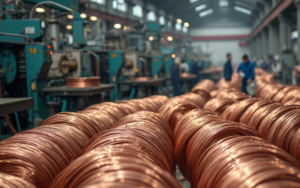
Strategically, a merger held compelling logic. A combined Rio Tinto-Glencore would have become the world’s largest copper producer, accounting for roughly 7% of global output, with leading positions in iron ore, coal, and other key commodities. Rio Tinto, which relies heavily on iron ore profits, has been seeking to expand its copper portfolio through projects such as the Resolution mine in the United States. Glencore, the world’s sixth-largest copper producer, also pivoted late last year to focus more on the metal, aiming to become the top global copper miner.
Yet this was the third attempt at a tie-up between the two—following prior discussions in 2014 and late 2024—with previous talks failing over valuation gaps, control issues, and significant cultural differences. Although Rio Tinto’s new leadership under CEO Simon Trott and Chairman Dominic Barton was seen as more deal-friendly, and Glencore CEO Gary Nagle had called a merger the “most obvious” deal in mining, the same hurdles resurfaced.
Analysts at Jefferies noted that disagreements over price and governance were at the heart of the breakdown. While a future re-engagement remains possible, the base case is now that Rio Tinto will focus on its standalone strategy. RBC analyst Ben Davis commented, “A deal of this scale, with the personalities involved, was always going to be a significant challenge.”
With the collapse of what many considered a potential decade-defining mining deal, both companies return to independent paths. Glencore emphasized in its statement that it remains well-positioned as a standalone company, with a diversified commodity portfolio and a top-tier marketing business capable of meeting both current energy needs and supplying materials critical to the global energy transition. The reshaping of the global mining landscape will have to wait for another opportunity.