
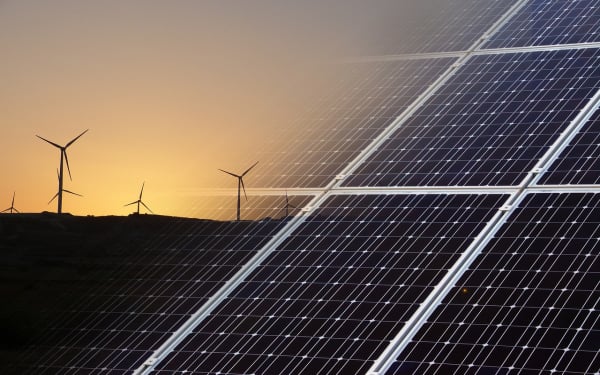
Rates have peaked, AI-driven power demand is surging, and policy support is firming up. The once-abandoned clean energy sector is quietly returning to long-term investors’ radar. But is this a true turnaround — or just the same old script?
A few years ago, Canadian renewable energy stocks were the brightest stars in the market. Names like Brookfield Renewable, Northland Power, and Capital Power were staples in almost every growth portfolio. In 2020 and 2021, money poured into anything even remotely related to “clean energy,” as if these stocks could only go up forever.
Then inflation hit, and rates spiked. Everything changed.
Because renewable energy projects are highly capital-intensive and rely heavily on borrowing for development, rising rates directly increased financing costs and sharply reduced the present value of future cash flows. Share prices tumbled from the clouds, and the sector quickly went from “the most crowded trade” to “the most ignored corner” of the market.
But investing’s greatest opportunities are often found precisely in that ignored corner.
Today, interest rates have backed off their peaks, and the market broadly expects further declines. At the same time, electricity demand from AI, data centers, and economy-wide electrification is growing at an unprecedented pace. Renewables are no longer just an “environmental ideal” — they are becoming an “economic necessity.”
So the question stands: Canadian renewable energy stocks – a buying opportunity or a trap?
To answer that question, we first need to ask: have the reasons behind the past few years of declines actually gone away?
Renewables are a classic capital-intensive industry. High rates over the last two years made new project financing difficult and triggered a revaluation of existing assets. Now, the Bank of Canada has entered a rate-cutting cycle. The cost of capital is improving, and this sector is among the most sensitive to that shift — meaning it could see the biggest valuation recovery.
AI data centers, electric vehicles, industrial electrification — these are not concepts. They are happening right now. The International Energy Agency (IEA) forecasts that global electricity demand growth will double over the next three years. Wind, solar, hydro, and storage are among the few options that can provide large-scale new power generation while keeping carbon low.
The U.S. Inflation Reduction Act (IRA), Canada’s Clean Electricity Regulations, the EU Green Deal — global policies are still putting a floor under renewables. More importantly, the levelized cost of wind and solar has fallen more than 80% over the past decade, and in many regions it is now cheaper than coal or natural gas. Cheap is the strongest moat of all.
Tags: Global platform + Diversified assets + 4.9% dividend yield
Brookfield Renewable is not an ordinary clean energy stock. It owns a globally diversified portfolio of hydro, wind, solar, and storage assets, backed by the capital deployment capabilities of Brookfield Asset Management. In a low-rate environment, it can finance, acquire, and develop projects at very low cost, creating a virtuous cycle.
Risk: The stock remains highly sensitive to interest rates. The USD/CAD exchange rate also affects its distributions.
Tags: Offshore wind specialist + Higher risk, higher upside + 3.1% yield
Northland focuses on offshore wind — one of the most technically complex and capital-intensive areas in renewables, but also one with enormous long-term potential. Its Hai Long project in Taiwan is massive in scale. Once successfully commissioned, it should generate stable, long-term cash flow.
Bull case: If global offshore wind construction accelerates, Northland offers the most obvious leverage.
Trap warning: Project delays and cost overruns are real risks.
Tags: Transition play (traditional to renewable) + 4.2% dividend yield
Capital Power is not a pure-play renewable company. It still owns natural gas facilities and other traditional assets, providing stable cash flow today. At the same time, it is steadily reinvesting those profits into wind, solar, and storage. This “two legs” strategy makes the stock less volatile than pure renewables and better suited for more conservative dividend investors.
Bull case: Predictable near-term cash flow plus a long-term growth option on clean energy.
Even if the narrative sounds attractive, Canadian renewable energy stocks are not without traps.
First, rates won’t fall forever. If inflation returns and rates head higher again, this sector will be the first to feel the pain.
Second, policy is cyclical. U.S. elections and Canadian federal budget changes can both affect subsidies and tax credits.
Third, rising competition and project execution risks. More capital is pouring into clean energy, driving up the cost of acquiring quality projects. For developers like Northland, any major project problem can send the stock swinging violently.
Taken together, Canadian renewable energy stocks are moving from “hype-driven” to “demand-driven.” Falling rates, AI power consumption, and policy support form a long-term structural bull case. For investors with a 3- to 5-year horizon, valuations have pulled back sharply from their 2021 highs, and dividend yields are generally in the 3%-5% range — offering a clear margin of safety.
But this is not a “close your eyes and buy” sector.
A more sensible strategy: use Brookfield Renewable as your core holding (global diversification, capital advantage), add Capital Power for stability, and consider Northland Power only if you have higher risk tolerance and want to bet on an offshore wind acceleration.
Buying opportunities are reserved for the patient. Traps are usually for those who chase.