
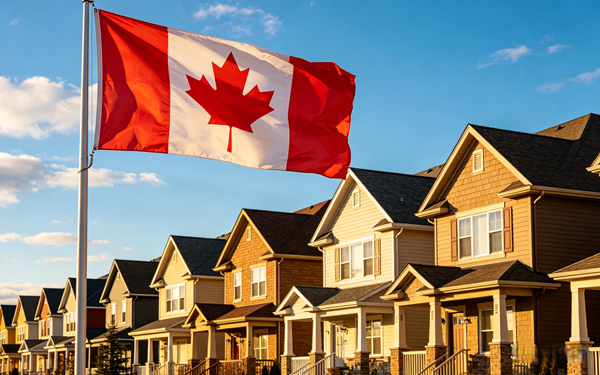
Canada’s spring 2026 housing market has fractured into a stark K-shaped divide, according to fresh data from Royal LePage released April 16. Midsize cities led by Quebec City are surging on critically low inventory, while traditional heavyweights Toronto and Vancouver continue to slide under the weight of an oversupplied condo sector and fragile buyer sentiment.
The aggregate home price in Greater Toronto fell 4.7% year-over-year to C$1.09 million in the first quarter; Greater Vancouver dropped 4.5% to C$1.17 million. The primary culprit is the condo segment—Toronto’s median condo price tumbled 6.5%, while Vancouver’s slid 4.8%.
“Many of those condo customers have simply disappeared,” said Phil Soper, president and CEO of Royal LePage. Ottawa’s sharp cuts to temporary foreign worker and international student programs have hollowed out a key source of rental and purchase demand. Montreal is experiencing a similar squeeze, with a wave of new downtown completions leaving resale condos stranded.
Detached homes, by contrast, are showing early signs of stabilization even in the weaker metros. Soper noted that Toronto and Vancouver are “beginning to eat into” single-family inventory, though a broader recovery remains distant.
Quebec City stands in stark contrast. Its aggregate home price soared 10.7% year-over-year to C$475,300—the eighth consecutive quarter it has led the nation in price growth. Median detached home prices jumped 11.1%. Michèle Fournier, vice-president at Royal LePage Inter-Québec, described a “fragmented” market where panic buying has cooled but multiple offers still erupt for scarce, move-in-ready listings.
Supply shortages echo across the Prairies and Atlantic Canada. Winnipeg prices rose 3.1%, Regina gained 3.5%, and Halifax added 1.5%. In Regina, sales representative Chad Ehman put it bluntly: “We need inventory to double to truly satisfy buyer appetite—otherwise prices will keep climbing.”
Three forces are widening the gap. First, resource-sector wage growth in smaller centers is boosting local purchasing power, but new construction lags far behind, widening the supply-demand deficit. Second, big-city condo markets are absorbing the direct blow of tighter immigration policy. Third, buyer behavior has shifted—growing economic anxiety has made “sell before you buy” the new norm, locking up inventory in already tight markets.
Interest-rate uncertainty adds another layer. Rising energy prices tied to the Iran conflict have erased room for Bank of Canada rate cuts. “The next move could be upward,” Soper warned. A handful of buyers are rushing to lock in pre-approvals before they expire, but most first-timers remain on the sidelines.
Royal LePage forecasts a modest 1.0% national aggregate price gain by Q4 2026, but the regional divergence will only widen. Quebec City is projected to surge another 12.0%, Montreal 5.0%, and Winnipeg and Regina 4.0% each. Meanwhile, Toronto is expected to slip another 4.5% and Vancouver 3.5%.
“National trends grab the headlines, but regional realities define the market on the ground,” Soper said. In supply-starved smaller cities, steady inward migration is pushing prices to new highs. In the mega-cities, a glut of condos is undergoing a delayed repricing. For Canadian buyers in 2026, the market is no longer a monolith—the choice between a resource-rich small town and a negotiating-friendly big city now defines the homebuying calculus.