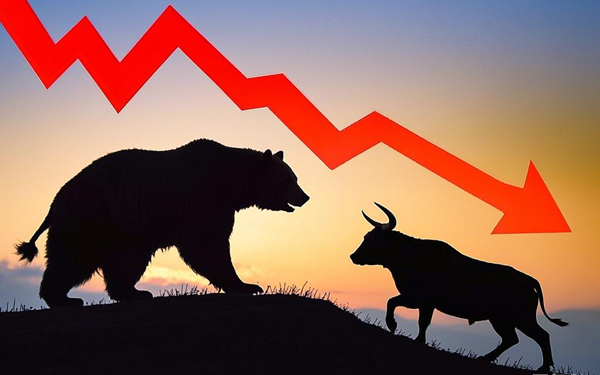
Gold prices tumbled more than 1% on Tuesday, breaking below the critical $4,500 per ounce support level, as stronger-than-expected U.S. housing data and persistent inflation pressures weighed on the non-yielding metal. Spot gold last traded at $4,495.30 an ounce, while silver suffered steeper losses, with its greater industrial exposure amplifying the downside move.
Amid multiple headwinds, gold’s short-term momentum remains weak, leaving investors asking: Has this correction run its course? And what signals should we watch for a definitive bottom?
The immediate catalyst for Tuesday’s decline came from the National Association of Realtors (NAR), which reported that U.S. pending home sales rose 1.4% month-over-month in April, handily beating economists’ consensus forecast of a 1.0% increase. On a year-over-year basis, pending sales climbed 3.2% over the past 12 months.
“Buyers are coming out with cautious optimism despite increasing economic uncertainty and a slight rise in mortgage rates,” said NAR Chief Economist Lawrence Yun. “Demand will easily be even higher once mortgage rates retreat to the levels they were at earlier this year.”
The better-than-expected housing data reinforced market expectations that the U.S. economy could avoid a recession, weakening gold’s safe-haven appeal and pushing back expectations for Federal Reserve interest rate cuts.
Housing data was merely the trigger; gold is currently facing three powerful downward forces:
First, elevated Treasury yields remain the single biggest drag on gold prices. The 10-year U.S. Treasury yield is holding steady near 4.6%, after closing at 4.61% on Monday. As a non-yielding asset, gold becomes less attractive relative to bonds as yields rise, increasing its opportunity cost.
Second, the U.S. dollar index has been recovering toward the 100 level, creating broad-based pressure on all dollar-denominated commodities.
Third, the Middle East situation is acting as a double-edged sword. Tensions in the Strait of Hormuz remain unresolved, keeping WTI crude above $100 per barrel and Brent crude above $110 per barrel. While geopolitical risk should theoretically support gold’s safe-haven demand, higher oil prices are instead fueling inflation fears and pushing interest rate expectations higher, which has proven to be a stronger negative force for gold.
The market is deeply divided on gold’s next move. Bears argue that the U.S. economy’s surprising resilience will keep interest rates higher for longer, and note that gold has traded with a strong positive correlation to U.S. equities in recent years, making it vulnerable to stock market weakness.
Bulls, however, are focused on the growing risk of stagflation. Fawad Razaqzada, Market Analyst at FOREX.com, pointed out that April’s Producer Price Index (PPI) data came in much hotter than expected, with energy inflation now spreading to the services sector—a “pipeline effect” that investors have long feared. “Short-term I think it is negative for gold, long-term positive,” he said, noting that a stagflationary environment would ultimately be highly supportive of gold prices.
At this point, there are no clear signs that gold has bottomed, and investors are advised against premature bottom-fishing. Instead, focus on these four key developments:
Overall, the $4,500 level has now flipped from support to significant resistance, and gold remains vulnerable to further downside in the near term. Investors should exercise patience and wait for these signals to align before adjusting their precious metals allocation strategies.