A little-known Vancouver-based potash developer has become the face of a seismic shift in the junior mining sector, as family offices bypass traditional funds to take direct stakes in critical resources. Millennial Potash Corp. (TSX-V: MLP) saw its shares skyrocket more than 900% last year, and despite a roughly one-third pullback, still commands a market value of C$281 million ($205 million) — all without generating any revenue.
The pre-production miner’s rapid ascent has been fueled by an influx of capital from ultra-high-net-worth families, a group historically absent from the high-risk world of early-stage mining. Leading the charge is Singapore’s Quaternary Group, an investment vehicle for Ross Hamou-Jennings, former Asia chairman of agricultural commodities giant Cargill Inc. Quaternary holds approximately 25% of Millennial Potash, with Hamou-Jennings leveraging his decades of industry experience to exploit what he sees as a significant valuation gap.
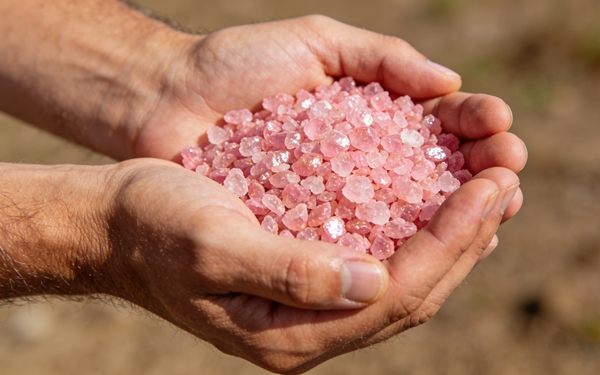
Potash, a potassium-rich salt essential for boosting crop yields and resilience, forms a $30 billion global niche market where major economies including the U.S. and China lack self-sufficiency. This strategic importance was formally recognized last November when the U.S. added potash to its list of critical minerals, a move that directly catalyzed Millennial’s share price surge.
Hong Kong’s Cavendish Investment Corp., a multi-family office that typically deploys between $5 million and $50 million per deal, is another key backer. The firm views fertilizers as indispensable strategic assets amid increasingly fragmented global supply chains. Below the public disclosure threshold, Millennial’s shareholder register includes a Canadian family office, a U.S.-based family office, and a wealthy Persian Gulf clan, each holding just under 5% of the company. Chairman Farhad Abasov confirmed he is in talks with additional family offices in Hong Kong and Singapore to raise further capital.
Millennial Potash’s sole asset is the Banio potash project in Gabon, West Africa. Its primary competitive advantage lies in its proximity to the deep-water port at Mayumba, which allows direct shipments to major markets like Brazil while avoiding traditional maritime choke points. While still in development, SCP Research has initiated coverage with a “buy” rating, citing Abasov’s proven track record of delivering successful potash projects at Potash One and Allana Potash.
The company’s capital story reflects a broader industry trend. Ultra-high-net-worth families are increasingly eschewing managed funds in favor of direct ownership of hard assets. Colombia’s richest man, Jaime Gilinski, has repeatedly increased his stake in independent oil and gas producer GeoPark Ltd. to gain exposure to Venezuela’s recovering energy sector. Similarly, heirs to Swedish industrialist Adolf Lundin spent nearly C$40 million in March to boost holdings in copper and diamond miners amid supply chain constraints.
“Families are no longer just passive wealth managers — they are active operators in sectors like mining, healthcare, and renewables,” said Jean-Sebastien Jacquetin, managing partner at Cavendish. “The current geopolitical environment and conflicts have driven a return to fundamental investing.”
Notably, most family offices entering the junior mining space bring deep commodities expertise. Hamou-Jennings, for instance, favors large direct stakes in bottleneck resources, with additional investments in Canadian precious metals explorer P2 Gold Inc. and battery metals developer Surge Battery Metals Inc.
He warned that many families miss the optimal entry window for early-stage mining companies. “They shouldn’t wait for projects to de-risk and valuations to rise before seeking private placements, because by then, the companies simply won’t need the money,” he said.
While junior mining carries inherent risks — Millennial’s valuation remains elevated by historical standards, and its Gabon project faces development uncertainties — the influx of family capital is fundamentally reshaping the sector’s investment landscape. As global food security concerns intensify, potash’s strategic value is likely to continue attracting long-term private wealth for years to come.