
Pinnacle Silver & Gold Corp (TSXV: PINN)
Building a New Americas-Focused Silver and Gold Company
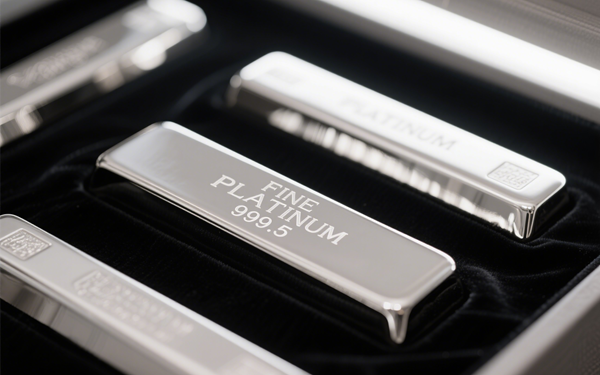
The global platinum market is on track for its fourth consecutive year of supply shortfalls, with the 2026 deficit revised higher to nine tonnes, according to the latest quarterly report from the World Platinum Investment Council (WPIC). Tightening market conditions will push above-ground platinum inventories down to 54 tonnes by end-2026, representing less than three months of global consumption. Driven by booming AI infrastructure development and accelerating hydrogen energy adoption, alongside stricter automotive emissions regulations, platinum’s long-term market fundamentals remain firmly bullish.
The platinum market posted a quarterly surplus of eight tonnes in the first quarter of 2026, marking its first oversupply in six years. However, the WPIC stressed the Q1 reading is a temporary market blip rather than a trend reversal. South Africa’s unseasonably strong output lifted global platinum supply 18% year-on-year to 54 tonnes in the quarter. On the demand side, massive outflows of 12 tonnes across exchange-traded funds and on-exchange inventories triggered a 31% year-on-year slump in total demand to 46 tonnes, emerging as the single biggest drag on quarterly consumption.
Market dynamics are set to reverse over the full 2026 calendar year. Global platinum demand is projected to fall 9% annually to 239 tonnes, a net reduction of 23 tonnes, largely due to a sharp U-turn in investment sentiment. Both exchange stockpiles and ETF holdings are expected to see net outflows of three tonnes each, a stark contrast to the robust inflows recorded in 2025.
Total platinum supply is forecast to edge up 2% year-on-year to 229 tonnes, aided by a 9% rise in recycled supply to 57 tonnes. Primary mine production is expected to remain flat at 173 tonnes, offering no incremental relief to the tight market balance.
2026 will see stark divergence across platinum’s end-use sectors. Industrial demand is poised to rise 9% to 70 tonnes, spearheaded by a 83% surge in glass manufacturing demand to 12 tonnes as idle production capacity restarts operations. Beyond traditional industries, platinum has become an indispensable material for AI infrastructure, with widespread applications in optical communication and data storage systems.
Renewed global focus on energy security has also revitalized investment in hydrogen technology, forming a core long-term growth driver for platinum. The metal is critical to proton exchange membrane electrolyzers and fuel cells, positioning it to benefit substantially from the global expansion of the hydrogen economy.
The automotive sector continues to demonstrate strong demand resilience, with full-year consumption only dipping 2% to 92 tonnes. An 8% drop in light internal combustion engine vehicle output will be largely offset by a 12% increase in hybrid vehicle production, while heavy-duty vehicle demand in the U.S. and India will provide additional support. Upcoming global emissions standards are further underpinning automotive platinum demand.
In contrast, the jewellery sector faces notable pressure. Higher platinum prices and elevated living costs are expected to drag annual jewellery demand down 12% to 61 tonnes, with the Chinese market suffering a steep 43% year-on-year decline in consumption.
The investment segment shows highly polarized trends. Total investment demand is set to plummet 54% to 16 tonnes, dragged by ETF outflows. Meanwhile, retail demand for physical platinum bars and coins is surging 27% to 22 tonnes, hitting a six-year high and reflecting strong strategic allocation from global value investors.
“Platinum demand has proven resilient despite ongoing geopolitical headwinds in the Middle East,” said Trevor Raymond, Chief Executive Officer at WPIC. “Expanding AI and hydrogen use cases, paired with tightening automotive emissions rules, provide multi-layered structural support for long-term demand. Persistent market undersupply keeps platinum’s investment fundamentals compelling for market participants.”
Market analysts note that four straight years of supply deficits have left the physical platinum market critically tight. Multiple quarters of substantial oversupply would be required to replenish above-ground inventories to sustainable levels, creating solid long-term price support for the industrial precious metal.