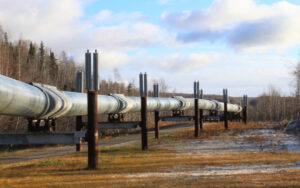
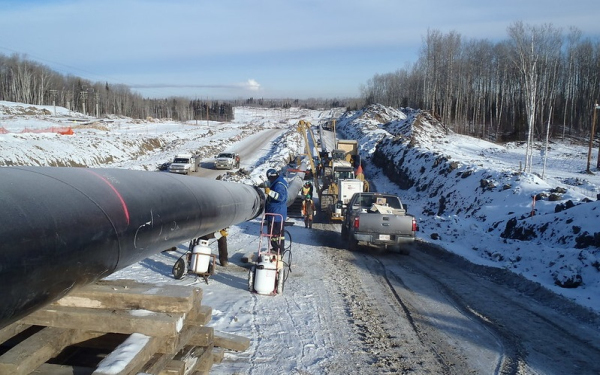
In a significant shift after years of opposition, British Columbia Premier David Eby has signaled a conditional openness to new oil pipelines in his province, provided the federal government’s ban on oil tankers along the northern coast remains firmly in place.
This potential thaw in one of Canada’s most contentious interprovincial stalemates introduces a new dynamic following the recent signing of a historic energy cooperation agreement between Prime Minister Mark Carney and Alberta Premier Danielle Smith.
The federal-Alberta memorandum of understanding (MOU) outlines a pathway for a new pipeline to the Pacific, contingent on a private sector proponent coming forward. In exchange for Alberta negotiating an industrial carbon pricing agreement with a floor of $130 per tonne by 2026, the federal government has agreed to suspend clean electricity regulations in the province, not implement an oil and gas emissions cap, and, “if required,” provide an exemption to the federal tanker ban.
However, Premier Eby has drawn a clear line. In an interview, he stated that lifting the 2019 tanker ban, which prohibits oil tankers from ports on the B.C. north coast, would be a “grave mistake.” “My anxiety is about this oil tanker ban, which is the foundational social license piece for tens of billions of dollars of investment in B.C.,” Eby said. “If we can agree that the oil tanker ban is going to stay in place, then let’s have those conversations.”
Eby’s newfound flexibility comes with a backdrop of tense relations. Ahead of the MOU announcement, B.C. officials had expressed fury at being excluded from the talks, with Energy Minister Adrian Dix criticizing “performative politics.”
Eby also pointed to his government’s recent support for increasing the capacity of the existing Trans Mountain pipeline by 40% as a demonstration of pragmatic, if reluctant, cooperation.
“We’ve offered that up to Alberta to say we’re happy to work with you on this. And I say happy, but it’s gritted teeth,” Eby acknowledged, citing the federal jurisdiction over interprovincial projects as a reason to avoid futile fights. “It’s built now. It’s publicly owned… We’re willing to sit at the table and work out those details.”
The path forward remains uncertain. Ian Anderson, former President of Kinder Morgan Canada, noted that “the market should decide where that pipeline ends up,” listing potential terminals like Kitimat, Prince Rupert, or Vancouver. The federal-Alberta MOU commits to engaging with British Columbia, and Eby has since had a “frank” conversation with Federal Energy Minister Tim Hodgson, who confirmed the need for a “trilateral table” to advance the issues.
While Eby’s conditional openness has cracked the door for dialogue, the future of a new pipeline hinges on complex negotiations, market forces, and the unwavering condition of preserving the contentious tanker ban.