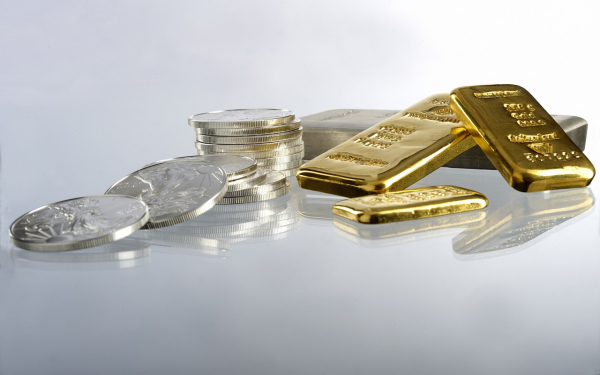
Amid market volatility fueled by a flurry of economic data releases, gold is reaffirming its safe-haven appeal. Prices for both gold and silver moved higher during Tuesday’s U.S. midday trading. December gold futures last rose by $41.30 to $4,135.80 per ounce, while December silver futures gained $0.409 to $50.75 per ounce.
Traders are closely monitoring mixed U.S. economic data, which is injecting uncertainty into the markets.
2025 is shaping up to be a stellar year for gold. According to data from Bloomberg, HSBC Private Bank, and Premier Wealth as of November 10, 2025, the precious metal has gained approximately 54% year-to-date, putting it on track for its strongest annual performance since 1979 (when it gained 126.6%). This exceptional performance is primarily attributed to rising global uncertainty and concerns about USD debasement.
Price action highlights market swings: Gold hit an all-time high of approximately $4,380/oz in October, before pulling back to around $3,885/oz within two weeks as retail investors took profits. After consolidating around the $4,000/oz level, gold has resumed its upward momentum, driven by speculation that delayed U.S. economic data might support another Federal Reserve rate cut in December.
Central bank demand has become a core structural factor supporting gold prices. Data shows that gold’s share of global central bank reserves has risen significantly from around 13% in 2022 to approximately 22% by Q2 2025. During this period, gold prices rose roughly 125% (from $2,000/oz to over $4,000/oz). Despite elevated prices, central banks have continued accumulating gold, underscoring their low sensitivity to price.
This trend is driven by strategic reserve diversification. Since 2022, a marked increase in global uncertainties—including geopolitical conflicts, economic and fiscal challenges, rising inflation, and major political shifts—has prompted central banks to restructure their reserves. Concurrently, uncertainties surrounding the U.S. economy (political, international, economic, and fiscal) have generated negative sentiment toward the U.S. dollar, leading central banks to reduce USD exposure and accelerate gold allocation.
As long-term, strategic institutions, central banks are unlikely to rapidly change their current framework. Their consistent and stable purchases are expected to create a price floor, sustaining gold at elevated levels. Even if the pace of buying moderates, large-scale selling is highly improbable.
Retail investment demand is also pivotal. Since mid-2024, gold-backed ETF holdings have trended consistently higher, indicating growing investor interest in accessing gold through convenient channels. The same factors driving central bank demand are also influencing retail investors, significantly boosting appetite for gold exposure.
The economic backdrop remains supportive. Historical data shows gold prices typically exhibit a negative correlation with the U.S. dollar and U.S. Treasury yields (a stronger dollar makes gold more expensive, while higher yields increase the opportunity cost of holding non-yielding gold). Although a recent positive correlation with equity indices has emerged (partly as investors sold gold to cover equity losses), analysts note this does not mean gold has lost its safe-haven status. This positive correlation is more pronounced when gold prices are at historic highs, but gold remains an important protective asset.
Although short-term consolidation is possible, gold’s upward trend is expected to gradually resume, maintaining a slow ascent. Market expectations suggest that if the Fed continues rate cuts in December and the dollar remains weak, gold prices could climb further in the coming months. However, an unexpectedly hawkish pivot from the Fed or an improved global economic environment pose downside risks.
In the current market environment, gold’s value as a portfolio diversifier remains prominent, supported by robust central bank demand, concerns over USD weakness, and sustained inflows into gold-backed ETFs. As global uncertainties persist, the precious metal’s shine is expected to endure.