The widening conflict in the Middle East is no longer just about oil. Over the weekend, escalated hostilities between the US, Israel, and Iran directly threatened the Strait of Hormuz—a critical chokepoint for global commodity flows—triggering a sharp rally in aluminum prices as traders priced in mounting supply risks.
Aluminum surged 1.7% on the London Metal Exchange on Monday to settle at $3,194.50 per metric ton, the highest level since January. The move reflects growing anxiety over the Strait of Hormuz, a waterway off the Iranian coast that handles about one-fifth of the world’s oil and one-third of its LNG, but also serves as a vital artery for the Middle East’s aluminum industry.
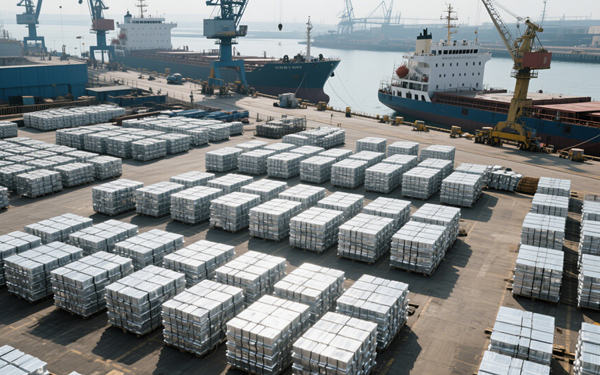
Major regional producers, including Emirates Global Aluminum (EGA) in the UAE and Aluminium Bahrain, rely on the strait both to ship finished metal and to import alumina and bauxite—the raw materials needed to run their smelters. Over the weekend, a fire broke out at a berth at Dubai’s Jebel Ali port—just kilometers from EGA’s facilities—after debris from an aerial interception landed there. While not directly hitting the smelter, the incident underscored how close the conflict has come to critical infrastructure.
According to consultancy AZ China Ltd., the Middle East accounts for roughly 9% of global aluminum smelting capacity. “Potential disruptions to bauxite or alumina flows that feed smelters present a very significant risk,” said Li Xuezhi, head of research at Chaos Ternary Futures.
Citigroup analysts, including Wenyu Yao, noted that smelters typically hold one to two weeks of inventory, which limits the immediate threat to production. However, they added that war-risk premiums, higher freight rates, and shipping delays from the Gulf are the most plausible near-term impacts.
Beyond the headline price jump, underlying market dynamics point to mounting tightness. LME cash contracts began trading at a premium to later-dated futures—a condition known as backwardation that signals strong near-term demand relative to supply.
Adding to the tension, Rio Tinto Group suspended negotiations with Japanese buyers over second-quarter aluminum supply, citing US and Israeli strikes against Iran. The miner had initially offered a premium of $250 per ton over LME prices—the highest since at least 2015—before withdrawing the offer entirely.
The bullish sentiment extended to options markets, where traders placed bets worth billions of dollars on a major shortage. Activity was concentrated in April call options targeting prices between $3,300 and $3,500 per ton.
Still, the outlook is not straightforward. Citigroup’s analysts described a “two-way macro pull” facing the aluminum market: while Gulf tensions push up regional premiums in Europe and the US, a surging dollar—driven by risk-off positioning—weighs on commodities priced in the US currency. That dynamic played out in copper, which erased early gains to close 1.8% lower.
US President Donald Trump said forces would continue bombing Iran until objectives are met, while Tehran has launched missiles at neighboring countries, including Saudi Arabia, the UAE, and Bahrain—all key aluminum producers.
For now, the market remains fixated on the Strait of Hormuz. Iran itself has around 790,000 tons of annual smelting capacity, according to AZ China, with 50,000 to 80,000 tons already halted as a precaution. If port activity is disrupted, more stoppages are likely. Aluminum has fired its first warning shot. How high prices go next depends on just how tightly the “throat” of the Gulf gets squeezed.