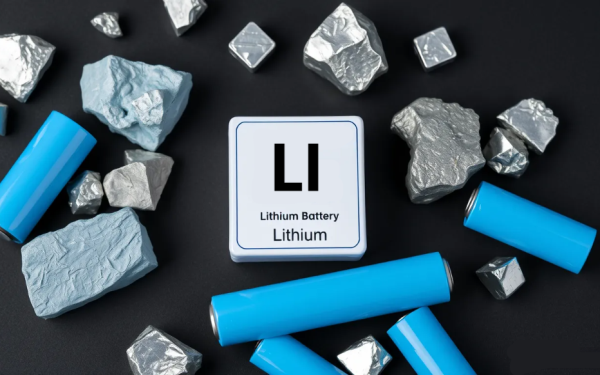
As the world scrambles to secure “white petroleum” – lithium – for electric vehicles and grid storage, Canada’s Alberta province has quietly revealed a powerful hand.
According to a new joint report from the Alberta Geological Survey and the Alberta Energy Regulator, the province’s deep subsurface brines contain an estimated 82.5 million tonnes of lithium carbonate equivalent (LCE), making it one of the largest known lithium accumulations globally. Much of this resource sits in the Devonian‑age Leduc formation – the same geological layer that launched Alberta’s modern oil industry in 1947. The analysis suggests this lithium could supply more than 10 billion EV battery packs and generate over US$1 trillion in cumulative revenue.
Unlike conventional hard‑rock mining or South America’s sprawling evaporation ponds, Alberta is pursuing direct lithium extraction (DLE). This technology, adapted from decades of oil‑and‑gas experience, uses solvents to selectively extract lithium from brine, then reinjects the spent fluid back underground – significantly reducing land disturbance and water loss.
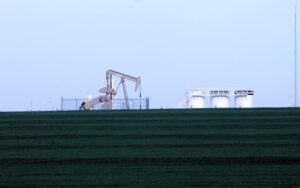
“We have a great resource base, and the oil and gas industry has already paved the way,” said Kim Mohler, Vice‑President of Project Development at GLJ Ltd. Drilling, well pads, and subsurface brine handling infrastructure are already in place.
Today, roughly two million hectares have been leased for lithium exploration in Alberta. The most advanced player, Calgary‑based E3 Lithium, produced the province’s first battery‑grade lithium carbonate at its demonstration facility near Olds in 2025 – validating the technology – and is targeting commercial‑scale production later this decade.
Despite the impressive resource number, Canada’s current lithium output remains tiny. In 2024, global lithium supply stood at 1.28 million tonnes LCE, yet Canada contributed only about 5,983 tonnes – a mere 0.47%. The country has just two operating lithium mines: TANCO in Manitoba and North American Lithium in Quebec.
That said, Canada’s total lithium potential is substantial: hard‑rock deposits plus oilfield brines add up to roughly 14 million tonnes of lithium oxide (equivalent to 6.5 million tonnes of lithium). The federal government has designated lithium as a critical mineral. Nevertheless, Canada remains a net importer of lithium products – in 2024, it imported CA$3 billion worth of lithium‑ion batteries while exporting only CA$1.1 billion, and the country is shifting from raw ore exports toward battery exports.
Alberta’s 82.5 million tonnes of LCE is more than a big number – it could theoretically reshape North America’s lithium supply. But moving from “resource ownership” to “map rewriting” faces three key challenges.
First, commercial‑scale DLE remains unproven. “Nobody has proven they can do DLE production at commercial scale yet,” Kim Mohler noted. If Alberta can become one of the world’s first to achieve that, it would gain a first‑mover technological advantage.
Second, economics are still uncertain. Lithium prices are highly volatile, but Alberta can leverage existing oil wells, pipelines, and power infrastructure to lower upfront capital costs. Mohler suggests following the oil‑and‑gas value‑chain model – having different companies specialise in upstream production, midstream transport, and refining – to optimise overall economics.
Third, the geopolitical window is open. North American lithium demand is rising fast: S&P Global forecasts U.S. consumption growth of roughly 74% annually and Canadian growth of about 40% by the end of the decade. Meanwhile, global lithium supply is heavily concentrated in Australia, Chile, Argentina, and China. Against a backdrop of supply‑chain de‑risking, Alberta sits right in the geopolitical gap for North American‑sourced lithium.
Alberta’s 82.5 million tonnes of LCE is a ticket toward North American lithium self‑sufficiency. If DLE technology reaches commercial scale within the next three to five years, Canada has a real chance to transform from a marginal lithium producer into a core supplier – serving the EV battery industry with a lower environmental footprint and a much shorter supply chain. As Kim Mohler put it: “The potential for Alberta to be among the first is very good, if they can make the economics work.” The map is being opened – but the ink has not yet dried.