

SLAM Exploration Ltd. (TSXV: SXL)
‘Exploring for critical elements and precious metals in New Brunswick, Canada.’
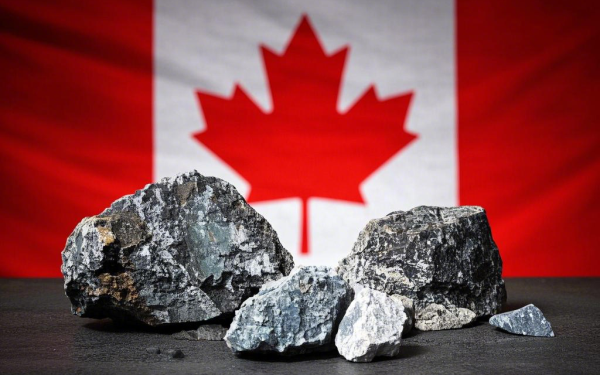
Canada’s federal government launched consultations on sweeping reforms to its major project regulatory system on Wednesday, proposing to cap federal review and decision-making timelines for all mining and infrastructure projects at one year once complete information is submitted by proponents. The landmark move, building on the August 2025 establishment of the Major Projects Office (MPO), aims to unlock Canada’s resource wealth, reduce reliance on the U.S. market, and has already sparked a sharp rally in domestic mining equities.
The reform push comes against a backdrop of profound global trade disruption. Since early 2025, protectionist policies under the Trump administration have injected significant uncertainty into Canada’s economic outlook, with tariffs targeting steel and aluminum reigniting cross-border trade tensions and exposing the risks of over-dependence on a single market.
Canada’s resource sector is the bedrock of its economy, contributing C$459 billion to nominal GDP in 2024, or 16% of total output. Resource-based merchandise exports reached C$383 billion, accounting for more than half of all Canadian goods exports, with approximately 75% destined for the United States. This economic reality propelled Prime Minister Mark Carney’s Liberal Party to victory in the 2025 federal election on a platform of economic diversification and accelerated nation-building, with mining regulatory reform emerging as a central policy priority.
The proposed reforms create a streamlined framework for mining development anchored by the one-year approval guarantee. Five complementary measures support this core commitment: establishing a Crown Consultation Hub to implement a “one community, one project, one consultation” process; introducing a single comprehensive federal decision for all permits and approvals; transferring regulatory authority for specific projects to the most expert federal bodies; creating federal economic zones through regional impact assessments; and maintaining rigorous environmental standards while upholding Indigenous rights.
These measures extend the work of the MPO, which has already accepted 21 nation-building initiatives—15 specific projects and six transformative strategies—representing over C$126 billion in total investment and supporting more than 60,000 high-paying jobs. To enhance Indigenous participation in resource development, the federal government doubled the Indigenous Loan Guarantee Program from C$5 billion to C$10 billion and expanded its scope to include major projects across all economic sectors.
Policy optimism has quickly translated into market momentum, with several Canadian mining stocks posting substantial gains since reform expectations began building. Canada Nickel Company (TSXV: CNC) has seen its share price surge more than 70% from C$1.03 on November 6, 2025—when its Crawford nickel project was designated a national interest project—to C$1.76 on May 13, 2026. Northcliff Resources Ltd. (TSX: NCF) delivered even stronger returns, jumping from C$0.18 to a peak of C$0.58 following approval of its Sisson tungsten mine project, and still trading at C$0.38 on May 13 for a 111% gain.
Industry leaders are responding with major investment commitments. Agnico Eagle Mines Ltd., the world’s third-largest gold producer, recently announced plans to invest approximately $14 billion in Ontario, with $12 billion allocated to existing operations through 2030 and $2 billion earmarked for the Detour Lake Underground gold mine expansion and the Upper Beaver gold-copper development. The investment is projected to create 1,600 new jobs and contribute nearly $5 billion to Ontario’s GDP.
Federal reforms have received enthusiastic support from provincial governments, which are implementing complementary measures to attract mining investment. Ontario has led the way with its “One Project, One Process” framework, which consolidates cross-ministerial approvals. The province has also established a C$70 million Indigenous Participation Fund and tripled its Indigenous Opportunities Financing Program to C$3 billion in loan guarantees—initiatives that directly facilitated Agnico Eagle’s landmark investment.
New Brunswick has gone further, introducing legislation to repeal and replace its 41-year-old Mining Act to modernize permitting processes. The province is actively seeking private partners to restart the strategically significant Lake George antimony project, which contains approximately 800,000 metric tons of antimony-bearing ore with an estimated in-situ value of $1 billion at current market prices.
While the reforms have been broadly welcomed by industry, uncertainties persist. Environmental groups have raised concerns that accelerated timelines could compromise the rigor of environmental assessments, and the government has yet to release specific details on how environmental review processes will be adjusted. Additionally, commodity price volatility remains the primary driver of mining company performance, regardless of regulatory improvements.
Nevertheless, Canada’s mining reform represents a fundamental shift in its economic strategy. By reducing regulatory friction and increasing policy certainty, the country is positioning itself to convert its vast resource endowment into competitive advantage in the global race for critical minerals. For investors, companies with high-quality resource deposits and the ability to advance projects quickly are best positioned to benefit from this new regulatory landscape.