
American Tungsten Corp. (TSXV: TUNG, OTCQB: DEMRF)
Building America’s Defense Critical Metals Supply
U.S. mining firm Cove Kaz Capital has completed the equity closing of a $1.1 billion tungsten project with Kazakhstan’s state-owned mining company, moving forward the deal first announced at the White House last year. Simultaneously, the firm announced plans to merge with an entity with significant stakes held by former U.S. President Donald Trump’s sons and pursue a Nasdaq listing, laying bare the underlying logic driving the Trump administration’s strategic bet on Kazakhstan’s tungsten resources.
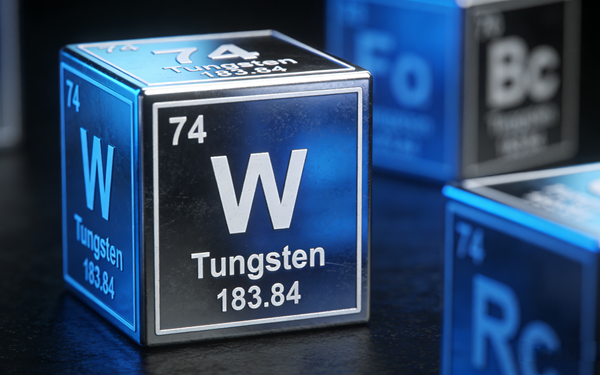
At the core of this push is tungsten’s unparalleled industrial and strategic irreplaceability. As the second-hardest metal on Earth after diamond, with the highest melting point of any element, tungsten is an irreplaceable building block for modern industrial and defense systems. It is indispensable across applications ranging from oil and gas drill bits, armor-piercing military rounds, and precision components for aero-engines, to core manufacturing equipment for renewable energy infrastructure. There are no viable substitutes for the metal, meaning its supply stability directly underpins the operational continuity of the U.S. defense industrial base.
At VRIC 2026, METALS 100 spoke with Ali Haji, CEO of Canadian mining exploration company American Tungsten Corp. (CSE: TUNG|OTCQB: TUNGF|FRA: RK90), who detailed the company’s latest developments and next steps. The company’s flagship asset is the IMA Mine Project in Idaho, USA, a past-producing tungsten property with significant historical output. In addition, the company holds the Star Project, covering 4,615.75 hectares in British Columbia’s renowned Skeena Mining District, an area known for its rich mineral resources.
The acute imbalance in the global supply landscape is the immediate catalyst for the Trump administration’s urgent action. China controls more than 80% of global tungsten supply, a concentration that has left Western economies heavily exposed to supply chain risks. Compounded by two decades of severe underinvestment in Western mining projects, global tungsten inventories have plummeted to historic lows, creating an entrenched structural deficit in the market. Tungsten prices have skyrocketed fivefold in a single year, pushing U.S. anxiety over its resource reliance on a geopolitical rival to a fever pitch.
Kazakhstan was chosen for both its unmatched resource endowment and geopolitical alignment. The Central Asian nation holds over 10% of the world’s tungsten reserves, with the deposits in this project estimated to contain 1.4 million tons of tungsten trioxide, giving it the scale to shift the needle on global supply. Geopolitically, Kazakhstan has emerged as Washington’s key partner for critical minerals cooperation in Central Asia, with a memorandum of understanding on critical minerals signed in 2025 paving the way for U.S. capital inflow and production lock-in. The U.S. Export-Import Bank has already earmarked up to $240 million in financing for a local tungsten project, with a non-negotiable condition that 100% of the tungsten offtake goes to the U.S. to secure full supply chain autonomy.
From an industry perspective, this tungsten project is the flagship initiative of the Trump administration’s push to restructure U.S. critical mineral supply chains, and one of the only major U.S. critical mining ventures in Central Asia. The world has entered an era of mineral nationalism, and the explosive surge in tungsten prices is merely a warning shot for the broader market. The U.S.’s tungsten play in Kazakhstan marks a new, intensified phase in the global geopolitical battle for critical minerals.